Digital Tool Tracking: The Ultimate Guide for Modern Businesses
Why this issue is so important today
In today's industrial landscape, digital tool tracking has evolved from an optional technological gadget to a strategic necessity. Construction, manufacturing, and technical services companies are under unprecedented cost pressure. In these industries, tools are much more than simple aids; they are productive assets that form the core of the value chain.
When a drill is missing, a specialized wrench cannot be found, or a measuring device is not calibrated, the entire production line is at risk of shutdown. The consequences? Late penalties, unhappy customers, and massive profit losses.
At the same time, projects are becoming increasingly complex and the number of mobile devices in use is constantly growing. Today, teams often work across multiple sites, while service vehicles serve as mobile warehouses. Without systematic management, this dynamic quickly leads to a dangerous lack of transparency. Lost equipment, duplicate purchases, and missed maintenance intervals turn into major economic disadvantages.
Structural problems without digital tools
Companies that still rely on manual processes struggle with deep structural weaknesses. Excel spreadsheets, paper lists, or isolated software programs offer no real-time transparency.
1. The massive lack of transparency regarding location
Without digital tracking, employees often don't know where a piece of equipment is located. On large construction sites, this leads to time-consuming searches. Statistics show that construction workers spend up to 20% of their working time looking for equipment.
2. High loss rates and risk of theft
Equipment is often left behind on site or stolen. Without intelligent inventory management, there is no continuous documentation of tool usage and return. Often, the loss is only noticed weeks later during physical inventory—far too late to take action.
3. Inefficient and outdated inventory processes
The traditional year-end inventory is a logistical nightmare. It ties up valuable staff and requires operations to be shut down. A real-time system, on the other hand, ensures continuous inventory, accessible at any time by authorized employees.
4. Unclear responsibilities and lack of care
When everyone uses everything without clear attribution, the threshold for negligence decreases. This leads to increased wear and tear and frequent breakdowns. Digital tracking creates a "signature" with each withdrawal, automatically increasing the care taken by teams with the equipment.
Definition of technology
Digital tool tracking is not simply passive inventory management. It is an integrated system consisting of three pillars:
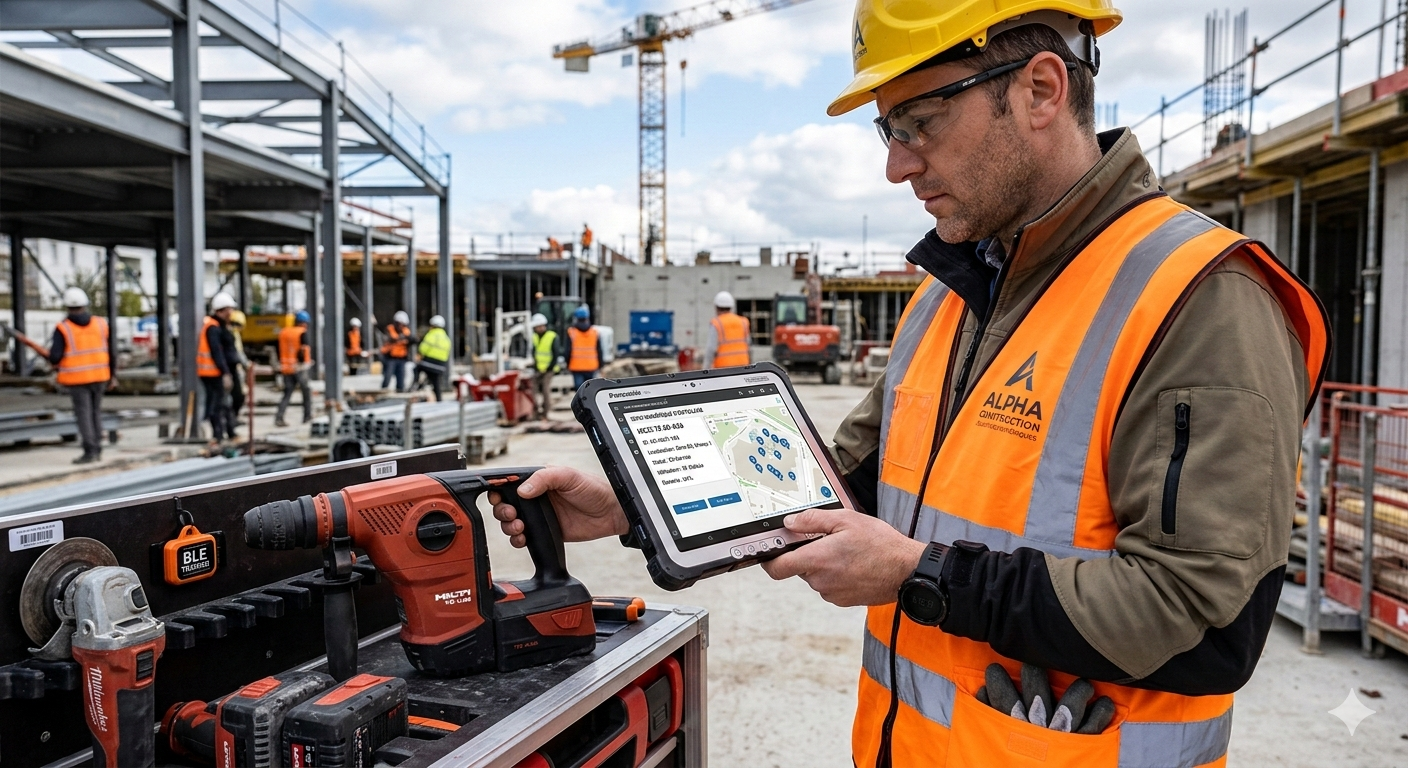
- Identification equipment: robust QR codes, Bluetooth Low Energy (BLE) tags, or active GPS modules.
- Mobile applications and gateways: Smartphones scan objects, or vehicles automatically detect tools on board via gateways.
- Central cloud platform: Algorithms analyze movements and display the status of the machine fleet on a dashboard.